

SD50HPT Earth Drill
SD50HPT Earth Drill
Digga’s HP Drive Series – High Power, High Performance
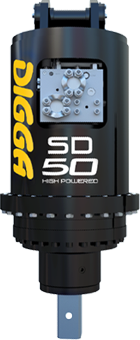
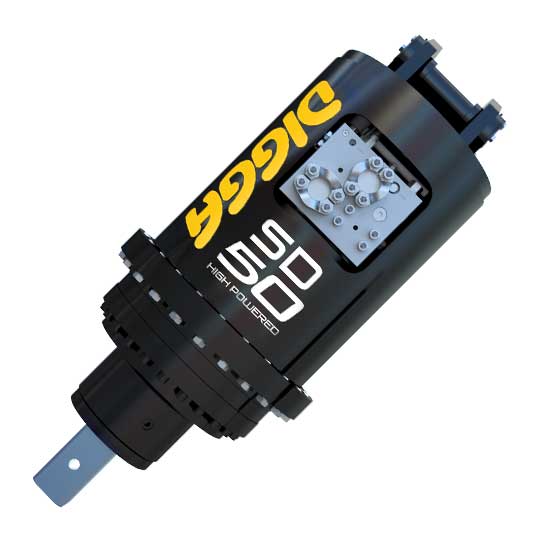
The SD50HPT, an upgrade of the SD45HPT, delivers 53,000 Nm of torque for heavy-duty drilling and anchoring. As part of Digga’s high-powered planetary drive series, it’s built for demanding foundation boring, screw piling, horizontal boring, and utility work, balancing power, reliability, and versatility.
It features a high-efficiency SAI Radial Piston motor (replacing the 6K Char-Lynn), handling up to 150 kW hydraulic power at 345 bar, paired with Digga’s precision planetary gearbox for a superior power-to-speed ratio.
The SAI motor improves efficiency and reliability under heavy loads. The in-house alloy steel gearbox ensures durability, low maintenance, and its compact design enhances clearance, safety, and auger or extension use.
Two-speed operation allows instant switching between high-speed and high-torque modes for versatility in tough jobs.

Speeds

Halo Alignment System

Machine Suitability

Ideal Application

Warranty
Dig into:
Specifications
Dig into:
Operator's Manuals
Dig into:
About Trenchers
Dig into:
FAQs
Features

Versatility – The HP Drive series is built for multi-purpose use, excelling at drilling and helical piling in both soft soils and hard rock. It easily switches between augering and screw anchor installation, offering the flexibility needed for varied ground and project demands.

Two-Speed Operation – Operators can switch between high-speed for fast drilling in light ground and high-torque for tougher tasks like screw piling or rock, maximizing productivity without changing equipment.

Lifetime Shaft Pull-out Warranty. Equipped with in-house designed, & manufactured shaft locking nut, this system is guaranteed to prevent shaft pull-out.

High Power Rating – The HP series handles up to 345bar pressure and 150kW hydraulic power, making it ideal for heavy-duty use. Its high power enables efficient operation with large-diameter tools and deep drilling, delivering excellent torque without sacrificing speed or reliability.

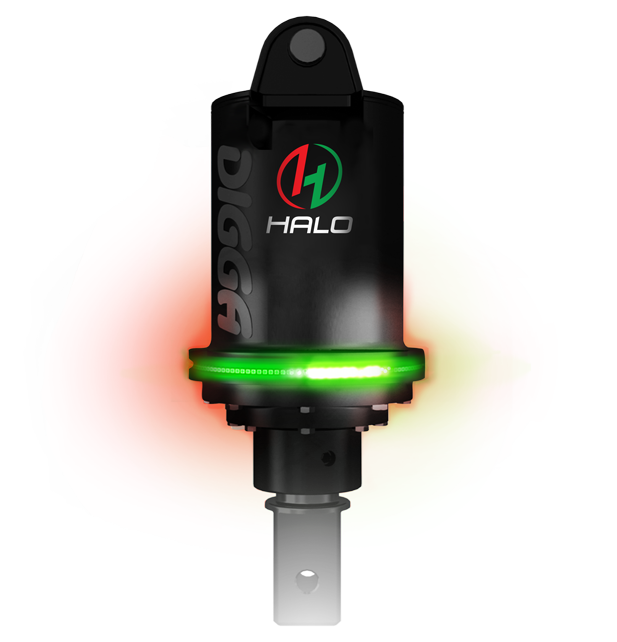
Halo: The perfect drilling partner
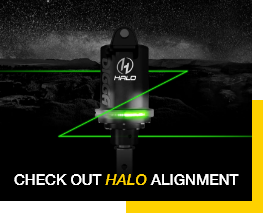
Halo is the ultimate solution for efficient and precise drilling; designed to save time, reduce costs, and ensure unmatched accuracy. By eliminating the need for a spotter, Halo allows you to reallocate onsite labour to other tasks, or operate autonomously with ease.
Its intuitive operation ensures impressive results, delivering more accurate boreholes and minimising costly hole oversizing. With Halo, you can achieve exceptional returns on your investment and maximise project efficiency. Halo is an indispensable tool for modern drilling operations.
Specifications
The HP Series is Digga’s premium range of high-powered drilling drives, purpose-built for heavy-duty applications such as foundation boring and screw piling. With two-speed operation, up to 150kW hydraulic power handling, and exceptional torque output, these drives deliver unmatched versatility, performance, and reliability for professional operators.
Specifications
| Machine Size Suitability | Up to 30 tonnes |
| Recommended Flow | 100-380 lpm |
| Maximum Torque | 53,505 Nm |
| Pressure Valve | Included |
| Energy Control Valve | Included |
| Recommended Auger | 11 Series |
| Maximum Auger Diameter (Earth) | 1800 mm |
| Maximum Auger Diameter (Clay / Shale) | 1500 mm |
| Maximum Auger Diameter (Fracturable Rock) | 1500 mm |
Build Information
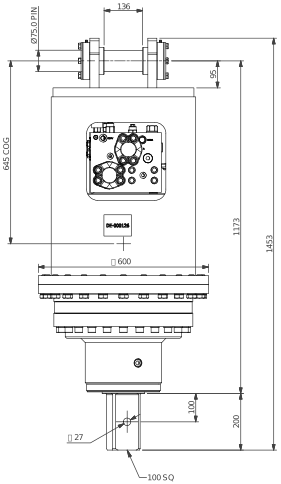
| Overall Length | 1453 mm |
| Diameter | 600 mm |
| Weight (Without Frame / Hitch) | 756 kg |
| Standard Output Shaft | 100 mm Square |
| Case Drain Recommended | Yes |
| Maximum Pressure | 345 bar at 266 lpm |
| Maximum Flow | 380 lpm at 240 bar |
| Maximum Power | 150 kW (200 hp) |
| Swing Control | Not Applicable |
| Diggalign | Not Applicable |
| Halo Available | In Development |
Torque / Speed Charts
Torque chart (Nm)
| Pressure (bar) | High Output Torque (Low Speed) | Low Output Torque (High Speed) |
|---|---|---|
| 195 | ||
| 210 | ||
| 225 | ||
| 240 | ||
| 255 | ||
| 270 | ||
| 285 | ||
| 300 | ||
| 315 | ||
| 330 | ||
| 345 |
Speed chart (RPM)
| Flow (lpm) | Low Output Speed (High Torque) | High Output Speed (Low Torque) |
|---|---|---|
| 100 | ||
| 120 | ||
| 140 | ||
| 160 | ||
| 180 | ||
| 200 | ||
| 220 | ||
| 240 | ||
| 260 | ||
| 280 | ||
| 300 | ||
| 320 | ||
| 340 | ||
| 360 | ||
| 380 |
Output speed and torque specifications are theoretical. Speed and torque outputs are dependent on overall system efficiencies associated with the prime mover's hydraulic system. This information should be used for comparative purposes only. When determining criteria, application-specific information is required. please contact DIGGA.
Compatible Augers
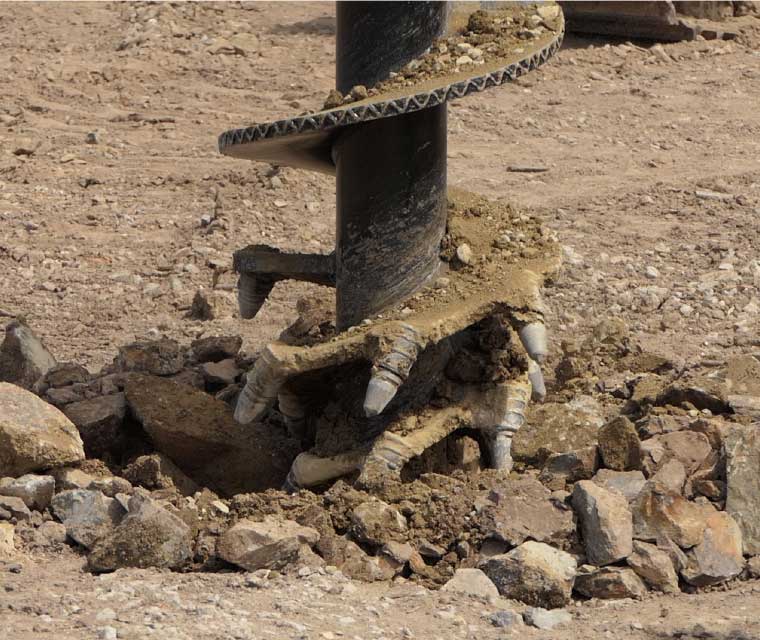
RC11 Auger
Tapered Teeth

DR11 Auger
Rotating Rock Picks

Extensions
XOHD Auger extensions
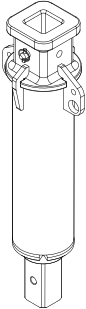
Digga’s Heavy-Duty Drilling Extensions increase drilling depth and attach directly to the auger drive hub and gearbox output shaft, with multiple lengths for different applications. For drives over 40,000Nm, the XOHD Outer Extension range handles up to 95,000Nm using a mechanically secured connection, preserving the strength of high-tensile steel and avoiding welds that can weaken material under extreme torque. This design ensures long-term durability and reliability.XOHD extensions have integrated eyelets, allowing the extension or auger to be safely suspended in the hole when drilling deeper than the machine’s lift height. Operators can add or remove extensions as needed, enabling much deeper drilling. Multiple length options are available to suit jobsite needs.
Extension Specifications
| Maximum Torque | 40,000 Nm (XT-XO) / 95,000 Nm (XOHD) |
| Standard Hub | 100 mm Square |
| Body (Outer) | Heavy Duty Tube - Fixed Length |
| Lengths | 1000 mm / 1500 mm / 2000 mm / 2500 mm / 3000 mm / 3500 mm / 4000 mm |
MY.DIGGA.COM
Find everything you need for your Digga attachment - Including operator manuals, safety information, risk assessments, electrical guides, maintenance tips, and 'how to' instructions. Our user-friendly interface and easy navigation ensure that you can quickly access the support and information you need.
LEARN MORE ABOUT EARTH DRILLS
From understanding the different types of earth drills available, to learning about components and maintenance, we hope you find this information helpful.
FREQUENTLY ASKED QUESTIONS
What earth drill best suits my machine?
General rule of thumb would be that your machine weight matches the model code of the earth drill.
i.e. 2 tonne Machine – PDX2, 3 tonne – PD3, 5 tonne – PD5, etc., etc...
Your application and expectation would be the next governing factor.
i.e. For a 5 tonne machine
The standard model reference of PD5 would best suit augering in general conditions of soil, clay, shale up to approx. 900 mm.
Should your main drilling requirement only be for softer ground conditions with smaller diameter augers, e.g. sand and soil with augers up to 600 mm diameter, then you may consider stepping down a model size to a PD4-5, (-5 denotes 75 mm square output shaft to match the recommended type 6 auger). This step down in model will give you more auger speed while still maintaining enough power to cope with the down-pressure of the 5 tonne machine.
Likewise, if your application requires larger dia. holes or harder condition, i.e. rock, then stepping up a model or two, PD6 or PD7 may best suit these applications.
What is the biggest earth drill I can put on my machine?
There is a several factors that are at play when suiting up “The Biggest earth drill” consideration needs to be given to:
- Lift capacity of the host machine: should the weight of the drill exceed the SWL (safe Working Load) of the host machine then the drive should not be fitted.
- Ground clearance: Careful consideration needs to be given to insure there is ample ground clearance under the pickup of the host machine when both the drive and drilling tool or Screw Pile are fitted.
- Application Overview: When selecting the largest drive, it's essential to consider both the desired outcome and the specific job requirements. These factors will significantly influence the choice of the appropriate drill.
What is kW and why does it matter?
Every hydraulic motor fixed to a planetary gearbox has a listed maximum power (kW) rating. Exceeding this rating will cause motor damage and failure.
Power is created by combining pressure and flow. You may increase pressure while reducing flow, or increase flow while reducing pressure – maximise both simultaneously may exceed the motor's safe operating limits. The kW Power can be calculated with the following formula (kW) = Flow (litres/minute) × Pressure (bar) ÷ 600
Operating outside the rated kW will cause:
- Excessive heat buildup, degrading hydraulic fluid
- Internal seal and shaft damage
- Motor seizure and failure
- Costly downtime and replacement
What happens if put the wrong drive on my machine?
If you install the wrong planetary earth drill on your machine, several issues could arise, potentially affecting performance, safety, and the longevity of both the drive and the machine:
- Incorrect Torque and Speed: The earth drill may not be suited to the hydraulic flow and pressure of your machine. This can result in too much or too little torque, either leading to inefficient digging or overstressing the drive components leading to frailer.
- Reduced Efficiency: The wrong drill might not be optimized for your specific drilling conditions, causing slower digging and increased wear on the auger teeth and pilot, leading to more frequent maintenance.
- Hydraulic System Strain: Using an incompatible drive could place excessive strain on your machine's hydraulic system, potentially causing overheating or damage to pumps, hoses, and other components.
- Poor Performance: If theearth drill is mismatched, it may not provide the required torque or rotational speed for your ground conditions, leading to subpar hole performance, especially in difficult ground.
- Increased Wear and Tear: An incorrect drive can accelerate wear on both the drill and the auger, leading to more frequent breakdowns or even failure, which can be costly and time-consuming to repair.
- Safety Hazards: A mismatched drive may cause unexpected behaviour, such as uncontrolled movements or failure under load, which could create a safety risk to operators, bystanders and equipment.
For optimal performance and safety, it's crucial to match the earth drill to your machine's specifications and the ground conditions you are working in.
What are the advantages of a 2-speed earth drill?
A 2-speed drill offers enhanced versatility and efficiency for drilling applications by providing two selectable speed ranges:
- High Torque (Low Speed): This setting is ideal for drilling through hard, compacted ground, clay, or rock. It delivers maximum torque, allowing the auger to cut through tougher materials with greater force, though at a slower speed.
- High Speed (Low Torque): This setting is suited for softer soils, such as sand or loam, where high torque isn't necessary. It allows for faster drilling, increasing productivity by completing holes more quickly in easier ground conditions.
Benefits of a 2-speed earth drill:
- Versatility: Allows you to switch between speed and torque depending on the ground conditions, making it suitable for a wide variety of drilling environments.
- Efficiency: Saves time and wear on equipment by using the appropriate speed and torque for each specific task.
- Enhanced Versatility and Performance: Engineered to handle both hard and soft soils, this design allows for the integration of a larger reduction gearbox, delivering increased torque without compromising speed. Enjoy the performance benefits of two earth drills in one, eliminating the need for equipment changes and significantly boosting overall job efficiency.
In short, a 2-speed earth drill offers greater diversity, control, and adaptability, ensuring optimal performance and productivity across different drilling conditions.
Can one earth drill fit both my machines?
It is possible to use one earth drill across two different machine sizes, but this depends on how closely matched the machines are. For example, an earth drill could work between a 5‑tonne and a 10‑tonne machine, or between a 15‑tonne and a 20‑tonne machine. However, the earth drill must always be selected to suit the larger machine.
This approach becomes impractical when there is a large size gap between machines. For instance, using the same earth drill on both a 3‑tonne and a 20‑tonne machine would not be feasible. The drive unit required for the larger machine would be too physically large for the smaller machine, and the smaller machine would not provide sufficient power to operate the earth drill effectively.
Some earth drills are designed to be used with a range of different machines and may come with adaptors or other attachments that allow them to be used with different sizes of equipment. However, it's important to check the specifications of the earth drill and the machines you must ensure that they are compatible.
Additionally, it's important to consider the power and torque of the machines, and the size and weight of the earth drill. A larger or heavier earth drill may require a more powerful machine to operate, and a smaller machine may not be able to handle the weight and torque of the earth drill.
It's important to consult with the manufacturer or a professional before deciding, and to check the compatibility and capacity of your machines with the earth drill you want to use.
The other option that is idea for this scenario of running one drive two machines is a 2-speed earth drill (see 2-speed high flow & 2-speed standard flow).
Will my 1 tonne machine dill a 600 mm diameter hole in solid rock?
In general, we would have to say NO - For the following reasons:
- Without knowing the grade of rock, e.g. for sandstone there are 5 grades, 1 – Being soft and weathered, classed as drillable, and 5 – Being extremely hard and classed as un-drillable.
- The physical downforce of your machine will not carry enough weight to functionally drill this diametre. hole in rock.
What is the difference between a PD5, PD6 & PD7?
There are several differences between a PD5 & PD6, PD7
The main difference is the amount of torque outputted by each individual unit. The PD5 maximum nominal torque @ 240 bar pressure is 5,000 Nm. A PD6 is 5,500 Nm, and PD7 is 6,000 Nm.
With each increment in increase of torque you have an equal decrease in output shaft speed when inputting the same amount of flow (lpm or gpm).
Additional differences between the PD5, the PD6, and PD7 is that the gearset of a PD5 has a series 2 gearset, and the PD6 and PD7 have a series 4 gearset. The difference is in the thickness of the gearsets in each. This is there to cope with the increasing weight of the parent machine, and for the increase in torque capabilities.
Also, there is a marked difference in the bearings size of the PD6 and PD7 over the PD5. The increase in size of the bearings in the PD6 and PD7 is to cope with the increase in weight from the parent/host machine.
What is better, round, square or hex shaft?
Depending on the torque output of the drive unit we would recommend a square or hexagonal shaft for all drives over 4,500 Nm. For drives under this torque rating a 65 mm Rnd as standard relies on the auger pin to bare the rotational load of the drive unit. This pin is rated to 10 kNm but with our safety factor we like to step up to square or hex for torques higher. By using sqare or hex, we are supporting the rotational load of the drive on the 4 sides of the square or the 6 sides of the hex.
Why does my earth drill need servicing?
The gearbox of earth drills sit in their own bath of oil. The gearbox is not lubricated by the machines hydraulic oil, as a result the oil needs regular changes similar to your car.
Service intervals are outlined in the operator’s manual provided with all Digga attachments. The recommended intervals depend on the intensity of use, ranging from occasional to extreme. For best practices, consult the manual to determine the appropriate maintenance schedule based on your specific usage.
Regular servicing is essential to maintain performance and extend the life of your equipment as well as your warranty.
What oil do I use in the gearbox?
Depending upon the earth drill model being used and its application will determine the type of oil needed, but in all earth drills, we recommend using an 'EP' (extreme pressure) oil. This will ensure longevity of your gearbox. Typically, your drills will come from factory filled with:
- ISO EP320 mineral oil ... For PDD to PD50 including 2-speed units
- ISO EP320 synthetic oil ... For SD, MD, UD, XD units
Note: If unsure please contact the Digga Service department for guidance.
Can I fit HALO on a competitor's earth drill?
You cannot use the Digga HALO system on non-Digga earth drills because the HALO system is specifically designed and engineered to suit Digga earth drills.
Here are some key reasons:
- Compatibility: The HALO alignment system is built to integrate seamlessly with Digga earth drills, ensuring correct fitment and performance. Competitor earth drills may have different dimensions, or operational requirements that aren't compatible with the HALO system.
- Calibration: HALO uses 6 sensors to provide real-time feedback on the auger’s angle for precise drilling. These sensors are calibrated to work specifically with Digga’s earth drills and control systems.
- Warranty and Support: Digga products, including the HALO system, are covered under specific warranties when used with compatible Digga components. Installing HALO on a non-Digga drive will void warranties,
Related Content
Products
Quality affordable attachments and gearboxes to suit most machine types, built tough to last with a factory-backed warranty and full backend support.

About us
We're more than assemblers. Experience the Digga difference, a history of manufacturing innovation since 1981.

Contact us
We're here to help. Whether you have questions about our product range, are ready to order, or have general enquiries - call us.

