

INTRODUCTION
Torque Heads
A helical pile is a type of foundation system that features one or more helix-shaped blades welded to a central shaft. It is screwed into the ground to anchor structures or support structural loads. Installed using a high-powered DIGGA torque head unit, helical piles offer a secure and stable foundation, making them ideal for applications where traditional footing methods may not be suitable. They are particularly effective in areas with loose or unstable soil as they penetrate deeper to establish a strong reliable anchor point, ensuring structural integrity in challenging ground conditions.

Quality, service & reliability guaranteed
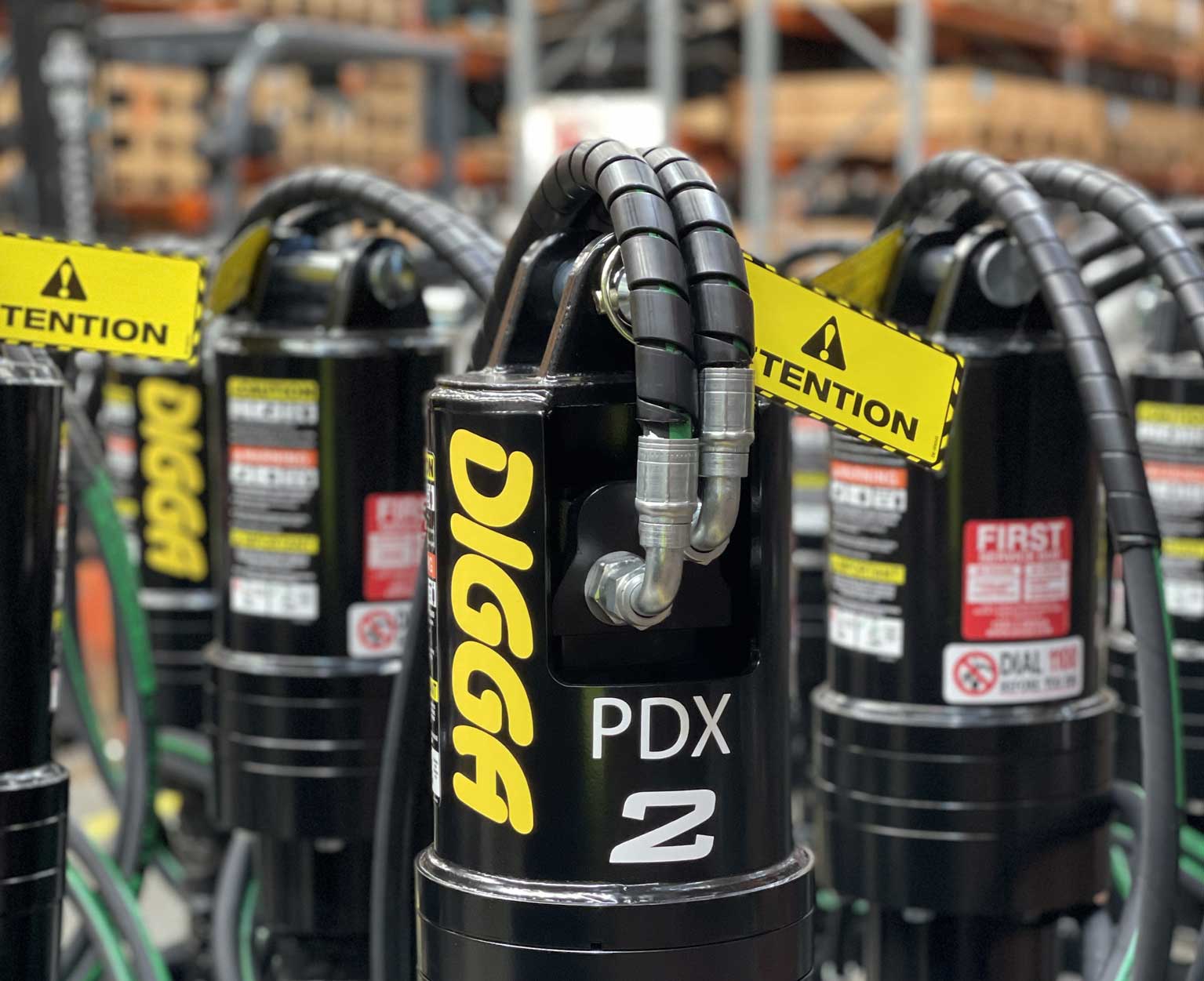
Our world-renowned torque heads are manufactured in our company-owned and operated state-of-the-art factories.
Using only the highest grade material and with the strictest of quality control methods, Digga gears, components, and attachment range are produced inhouse through 15 CNC and VMC machining centres, 15 gear cutting machines, and extensive state-of-the-art steel fabrication & robotic processes.
Efficient radial piston motor
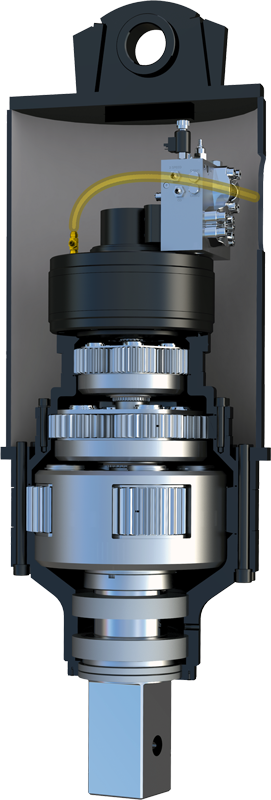
Digga’s PDHP and SD-XD range use radial piston motors which are volumetrically superior to any other motor on the market today, and more contamination resistant than axial piston motors. Capable of withstanding Case drain pressures three times our nearest competitor. Ratio – 2:1 two-speed.
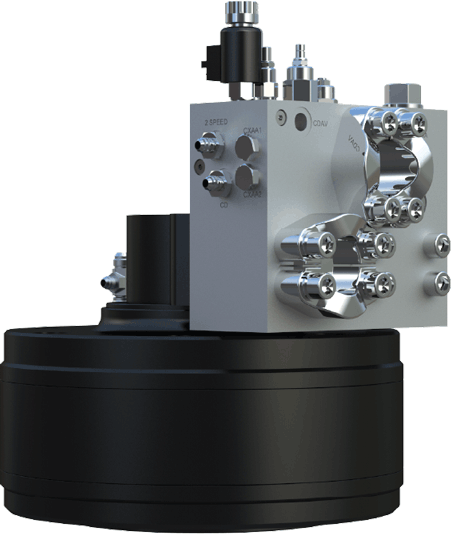
Patented anti kickback valve – Energy control valve (ECV)
Pile kickback is a critical concern when screw anchoring. However, using an ECV can prevent damage, by controlling the release of stored rotational energy. Key features include:
Installation process
When screw anchors are installed, the pile is rotated into the ground to meet a specific torque, storing rotational energy.
Kickback explanation
After reaching the torque, stopping the rotation causes a sudden release of this energy. This results in the pile briefly spinning in the opposite direction, akin to a wound-up spring releasing.
Impact on equipment
This kickback energy travels back through the drive shaft, gearbox, and hydraulic motor. It can cause cavitation and act like a high-speed pump, potentially leading to motor failure and damage to other components.
Role of the ECV
The Digga Energy Control Valve (ECV) manages this energy release. Activating the ECV, often recognised by its swooshing sound, controls the kickback effects. This safeguard protects the drive system, ensuring equipment reliability and longevity.
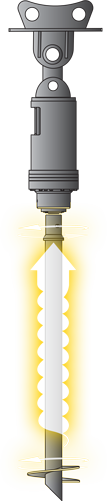
Rotational energy
RELIEF
Valve
A relief valve helps protect the motor by momentarily relieving pressure spikes that occur when the screw anchor suddenly stops rotating while installing. When a sudden halt creates a sharp increase in hydraulic pressure, the relief valve redirects excess oil past the motor and back to the tank, preventing damage to the motor and hydraulic system, by reducing the temporary pressure surge.
WHAT IS
kW? And why it matters
Every hydraulic motor fixed to a planetary gearbox has a listed maximum power (kW) rating. Exceeding this rating will cause motor damage and failure.
kW Power can be calculated with the following formula:
(kW) = Flow (litres/minute) × Pressure (bar) ÷ 600
CASE DRAIN
Why use one?
A case drain is needed in some hydraulic motors to manage internal leakage, heat buildup, and pressure balance.
Internal leakage & pressure relief
All hydraulic motors have some internal oil leakage due to clearance between components. This leakage is necessary for lubrication but can cause pressure buildup inside the motor casing. A case drain line allows excess oil to escape, preventing seal damage and motor failure caused by excessive pressure.
Heat dissipation
Hydraulic motors generate heat during operation, and excessive heat can damage seals and reduce efficiency. The case drain allows a small amount of oil to circulate out, carrying heat away and helping with cooling.
Balancing shaft seal pressure
Motors without a case drain rely on internal pressure balancing, but high backpressure in the return line can force oil past the shaft seals, leading to leaks. A case drain maintains a low-pressure zone inside the motor casing, protecting shaft seals from excessive pressure differentials.
High-pressure applications
Motors operating at high pressures or high duty cycles often require case drains because they experience greater internal leakage and heat buildup. This is common in radial piston, bent-axis, and high-performance Geroler/Gerotor motors.
Without a Case Drain
Blown case and/or shaft seals due to pressure buildup, overheating (reducing efficiency and lifespan), and premature motor failure from excessive internal pressure.
Compact design
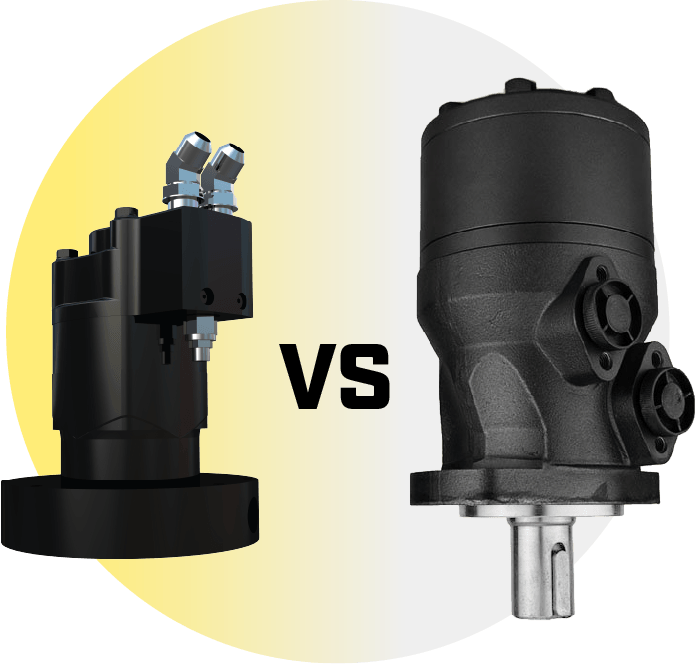
The compact design of Digga’s smaller torque heads compared to others, allows for greater working length underneath, enabling torque heads to go down the hole for added depth if required.
Because we design and manufacture each part inhouse, rather than assemble off the shelf components like others, our torque heads are superior quality.
MOTOR & GEARBOX
Ratings
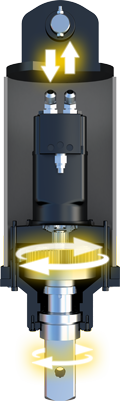
Each hydraulic motor is assigned a power rating, which is expressed in either kilowatts (kW) or horsepower (hp). This rating reflects the motor’s ability to handle a specific combination of hydraulic flow rate (measured in litres per minute, or ‘lpm’) and hydraulic pressure (measured in ‘bar’). To ensure optimal performance and longevity, it’s important to understand the two main limits that define the motor’s power capabilities:
- Max Flow @ Max Allowable Pressure
This figure indicates the highest level of combined flow and pressure that the motor can tolerate safely. For example: A motor rated at 115 lpm at 130 bar equates to approximately 25 kW of input power. - Max Pressure @ Max Allowable Flow
This value shows the highest hydraulic pressure the motor is designed to handle, based on a specified flow rate. Example: 240 bar at 60 lpm also results in around 25 kW of hydraulic power.
⚠ Exceeding the motor’s maximum kW (hp) rating can result in motor or gearbox failure.
Flow vs Pressure
- Flow (lpm)
This determines how fast the hydraulic motor spins — in other words, it controls the rotational speed of the motor. - Pressure (bar)
This determines how much torque, or turning force, the motor and gearbox can deliver under load.
Driving piles
At different depths
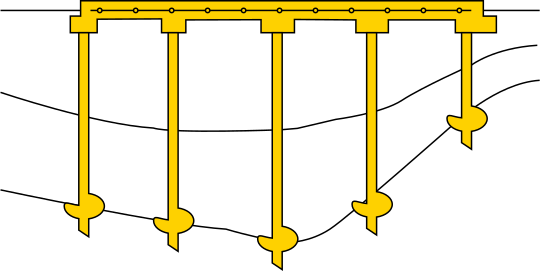
The depth at which piles are driven depends on the location of the load-bearing soil or substrate, which can vary across different areas. Some piles may need to be longer or shorter to reach the appropriate depth, ensuring they anchor into the correct load-bearing ground as specified in the geotechnical report. This ensures the stability and strength of the foundation, as the pile must sit in or on the suitable ground to effectively support the structure.
Why we make our own
Digga earth drills use Digga-manufactured gearboxes with exceptionally tight tolerances. Precision components are temperature-controlled during assembly to ensure perfect fit, delivering superior strength, smoother operation, and longer service life than imported alternatives.
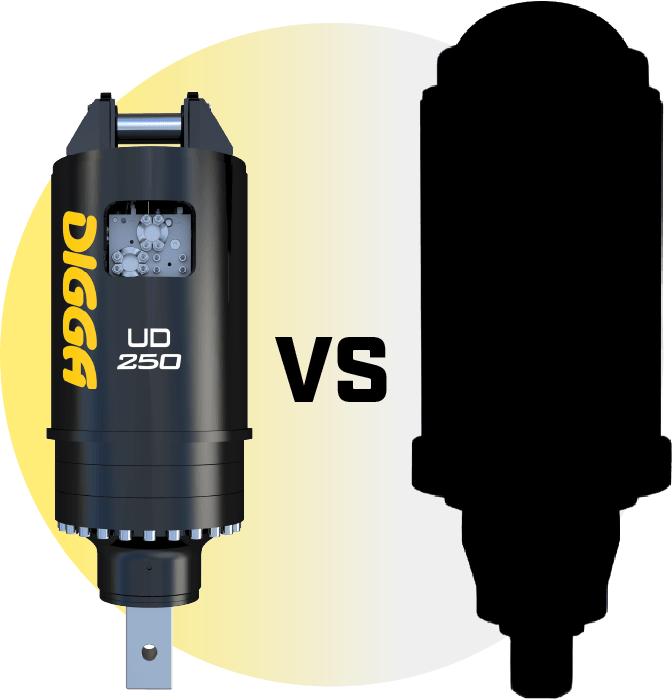
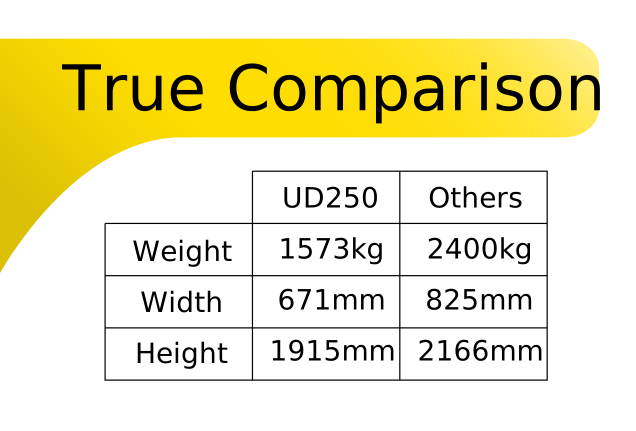
The above comparison highlights the significant size and weight differences between Digga torque heads compared to other, inferior products on the market.
2-Speed (PDT)
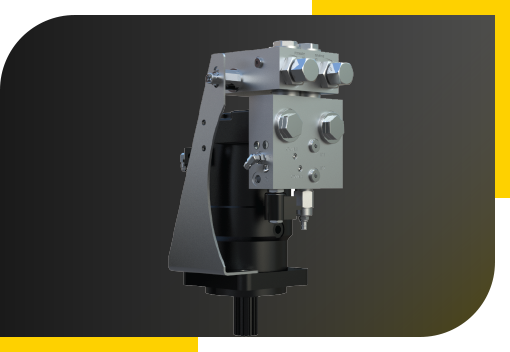
Digga’s 2-speed torque heads for high flow machines have been designed for a wider range of applications. Offering a high speed, low torque setting for the smaller jobs when you need that extra rpm, and low speed, high torque for when you really need to grind out that larger diameter hole. It’s like having 2 torque heads in 1.
VIS motors are 50 % more efficient than gear motors, resist contamination, handle 70 kW (95Hp), higher pressures than 6K series, and 2-speed models boost high-speed/low-torque by 50 %.
2-Piece shaft design
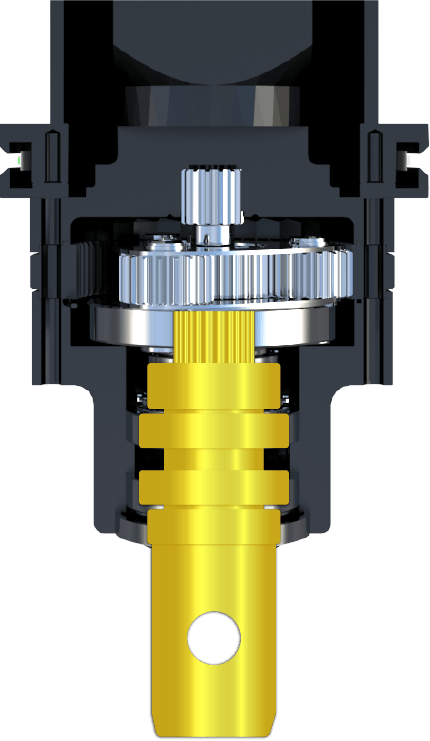
With more than double the side load capacity of competitors, Digga’s two-piece shaft design ensures bearings carry load efficiently without added stress.
The separate shaft isolates planetary gears from pushing, pulling, and bending forces, giving the highest pullout rating in the industry, secured with a heavy-duty custom lock nut.
EARTH DRILL
Couplings
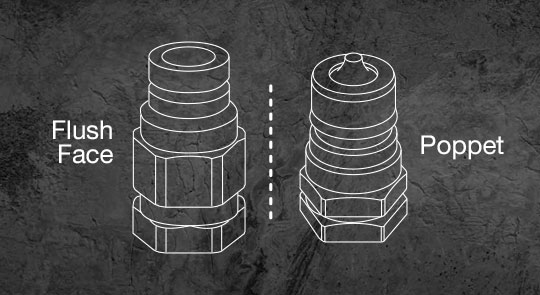
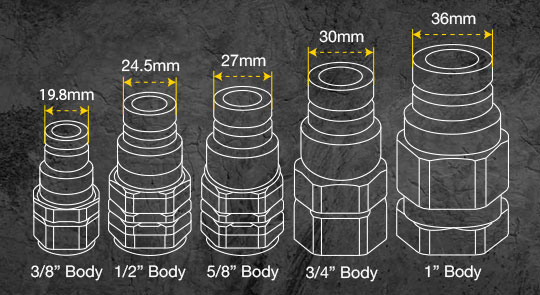
Flush Face Couplings – Designed for minimal leakage and better contamination control, making them ideal for cleaner hydraulic connections. However, they can be more difficult to connect or disconnect under pressure.
Poppet Couplings – Allow for easier pressure relief, making them simpler to connect and disconnect, but they are more prone to leakage and contamination compared to Flush Face couplings. Choosing the right type depends on the application and operating conditions.
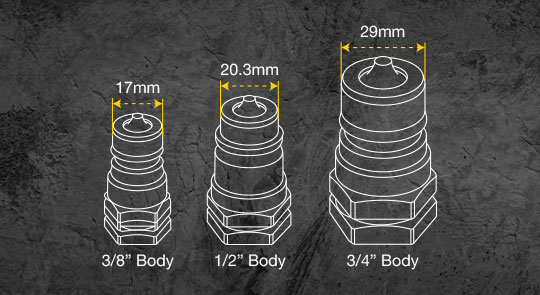
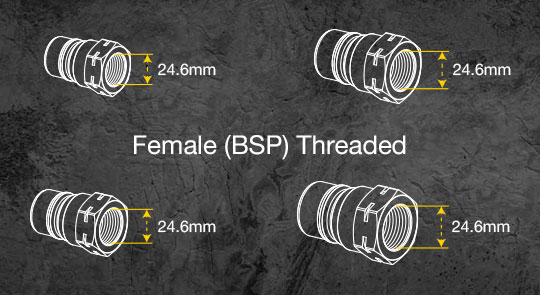
Replacing threaded fittings
First, Identify the type of coupling (flat face, or poppet style), then measure the external diameter of the machine’s male coupling. Finally, measure the internal diameter of the threaded side (female BSP).
Measuring couplings
First, identify type of coupling (flat face, or poppet style). Then, measure the diameter of the male coupling on the machine. Fractional body coupling sizes are industry standards, and are not to be used as actual coupling measurements. Example: A 3/8 inch male poppet coupling measures 17 mm – Not 9.5 mm as the fraction would indicate.
Torque Measuring Systems
Digga offers a range of torque measuring solutions which are operator friendly and easy to install to ensure the correct torque specifications are met and accurate data recorded every time.
Track every turn.
TORQUE HEAD
Frequently Asked Questions (FAQs)
Do you sell screw piles?
Digga does not manufacture Screw Piles. Screw Piles are designed and manufactured to meet specific engineered foundation requirements. As such a screw pile is required to be a certified foundation pile to meet the stringent building codes of most countries worldwide.
Digga’s forte lies in the manufacture of the Hydraulic Drive Tool for the effective installation of the screw Pile to meet with the specific torque requirements of the individual screw pile. These torque requirements can be from as low as 1000 Nm up to a massive torque requirement of 500,000 Nm. Digga has a drive head to meet all your torque requirements.
How do I install screw piles?
A screw-pile comprises a circular hollow section of steel shaft with one or more helical plates welded near to the end of it. The size of the shaft (diameter, wall thickness and length), combined with the size and placement of the helical plate are Engineer designed to take full advantage of the available soil capacity. Screw-piles are screwed into the ground like a self-tapping screw using rotary hydraulics, namely DIGGA TORQUE HEADS which are attached to earthmoving equipment, and installed to a specified torque capacity and a depth as directed by a certified foundation engineer.
Why do I need an ECV (Energy Control Valve) or 'Swoosh Valve'
Digga's torque head is used to screw the screw anchor into the ground. As the screw anchor reaches the desired compression torque or depth, the operator stops. At this point the screw anchor is under load.
When the operator stops, the load is trying to spin the screw anchor backwards. While the screw anchor is only tensioned to say a ¼ or ½ a turn, when it releases, it does so in under 1/10 of a second. This motion can have dire effects on both the gearbox and the motor, as it sends reverse energy back up into the drive unit. This motion effectively turns the reduction gearbox into a multiplier, essentially turning the hydraulic motor into a pump.
The Energy Control Valve (ECV) was designed to relieve the kick/flick-back motion of the screw anchor on the drive-head. It does so by controlling the release of oil to the low-pressure side of the motor. The added benefit of the design is that it does not reduce the power available to the unit when the drive is installing the screw anchor. Its unofficial name comes from the sound it makes while working — A gentle 'swoooosshhh' as the oil is released.
When is an ECV (Energy Control Valve) needed on a torque head?
An ECV is required for all drives used installing screw anchors; from PD4HF to PD50. This maintains a full gearbox and motor warranty (3 yr Gearbox and 2 yr Motor).
Should you be installing screw anchors with a torque requirement up to 16,000 Nm and do not have an ECV fitted, you will have limited warranty (2 yr Gearbox and 1 yr Motor).
Using torque heads without an ECV (effectively, an earth drill) for installing screw anchors with an installation torque requirement of greater than 16,000 Nm will have NO WARRANTY for its Gearbox or Motor.
What size torque head do I need for screw piling or screw anchoring?
This will be determined by the maximum torque requirement of the specific screw piles that will be installed at the site in question. This in turn will be specified by the foundation engineer who has designed and designated the exact dimension, installation and torque requirement for this job site.
What size machine is needed for screw anchoring - Does size matter?
This will be determined by the maximum torque requirement of the specific screw anchors that will be installed at the site in question. This in turn will be specified by the foundation engineer who has designed and designated the exact dimension, installation and torque requirement for this job site.
Does rpm speed change when I use larger drive units with more torque?
Dependent on the available flow and pressure available from the parent machine there will be a variation in the rpm speed of a smaller drive to a larger drive.
e.g. With the same parent machine with flow 200 lpm fitted with an SD45 would have 17 rpm at maximum torque, as opposed to same machine with same flow fitted with an SD95 would have 8 rpm at maximum torque. So, a definite flow decrease the larger the torque head.
It is worth noting, speed (rpm) is dependent on Flow (lpm). Power (Nm) depends on pressure (bar).
What is kW and why does it matter?
Every hydraulic motor fixed to a planetary gearbox has a listed maximum power (kW) rating. Exceeding this rating will cause motor damage and failure.
Power is created by combining pressure and flow. You may increase pressure while reducing flow, or increase flow while reducing pressure – maximise both simultaneously may exceed the motor's safe operating limits. The kW power can be calculated with the following formula (kW) = Flow (litres/minute) × Pressure (bar) ÷ 600.
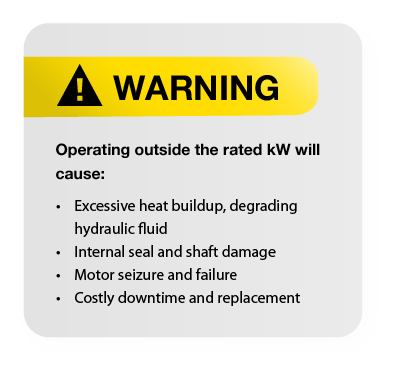
Operating outside the rated kW will cause:
- Excessive heat buildup, degrading hydraulic fluid
- Internal seal and shaft damage
- Motor seizure and failure
- Costly downtime and replacement
Can a torque head for screw anchors be used for auger drilling as well?
Yes, all torque heads are capable of use in screw anchoring and also as an earth drill. Larger torque heads with higher torque capabilities will be limited by the rpm that will satisfy your drilling requirements.
Can my 1.7 tonne machine install screw anchors?
Yes, but the size of the screw anchor would be limited by the amount of torque required, so that the machine is not compromised and is not at risk of boom failure or machine tipping. For safety factors, It is advised to confirm with the machine supplier for the machine in question.
Still got questions?
We're here to help. Whether you have general enquiries, questions about our product range, want to find your nearest dealer, or are ready to order - contact us today.
 +44 (0) 1488 688 550
Call Us
 [email protected]
Email Us
Related Content
Products
Quality affordable attachments and gearboxes to suit most machine types, built tough to last with a factory-backed warranty and full backend support.

Operating manuals
Keep your equipment in top working condition, access product information, manuals, and 'how-to' guides, with MyDigga.

Contact us
We're here to help. Whether you have questions about our product range, are ready to order, or have general enquiries - call us.

